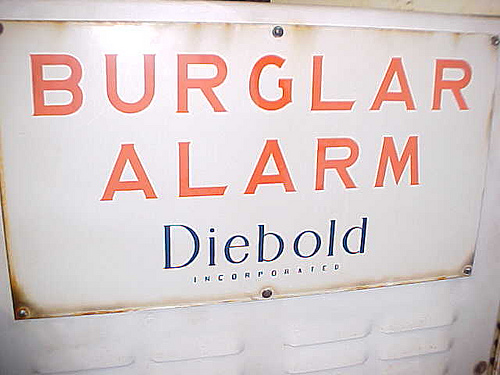
Post image for Are Burglar Alarms Really Effective?

By far, the most widely used types of security devices are burglar alarms which is pretty amazing considering that they used to be considered a rare luxury only three decades ago.  Typically, these alarms were only found in the homes of wealthier individuals meaning that a burglar had a better opportunity for victimizing a family in those days.  This is no longer the case as many homes today have burglar alarms protecting them and their contents.

It is somewhat ironic that there are differences of opinion when people ask the question “are burglar alarms really effective?” We would have to say that the answer to that is a resounding YES based on two observations.  First, installation of burglar alarms is very widespread today.  In fact, many new home builders are installing them during the construction process.  In addition to this, burglar activities still continue today as they did before the use of these alarms became so common.

The second observation is the fact that burglar alarms provide families with a certain level of psychological comfort once they have been installed.  It reinforces the mindset that the homeowner has taken proper measures and done everything that was humanly possible to create a more secure living environment.  In so many words, we are buying and installing “peace of mind.”

Whether a burglar operates on a small or large scale, burglar alarms still serve as a strong deterrent at the very least.  In the mind of the perpetrator, he sees the homeowner who has installed these alarms as being security conscious and that there may be some unpleasant surprises awaiting them on the inside of the home.  Naturally, you will always find the occasional hardcore criminal that cannot be deterred from getting what they want.

However, the cost of burglar alarms is more than justified when you consider what they deter.  Additionally, the consensus is that there are several different reasons why the use of these systems has become so widespread.

  • the emergence and growth of the gang culture
  • a failing morality in this and other countries
  • the gradual disintegration of family units
  • poverty and the ever widening gap between the poor and the wealthy
  • availability and falling costs of burglar alarms

Although there are a number of other reasons for purchasing and installing burglar alarms, these are the primary reasons for their growing popularity.

Photo via Borman818

{ 0 comments }

Post image for 3 steps to finding the best burglar alarms

The increase in the number of home invasions and burglar break-ins coupled with rising unemployment and an unstable economy has resulted in the growing popularity of installing burglar alarms to protect one’s family and personal property.  People feel more secure and are psychological comforted when they have these alarms installed.  There are numerous burglar alarms available on the market today so selecting the best one is somewhat of a challenge.  Here are 3 steps that will help you find the best ones.

First and foremost, take your family budget into consideration.  This will help you determine what type of burglar alarms you can safely afford to purchase and install.  In so doing, you will be eliminating all the costlier choices, therefore saving you some frustration in the process.  Just keep in mind that the cheaper systems don’t have a lot of features.

Determine what the cost of the installation of your burglar alarms is going to be.  Some companies include the price of installation while others charge an additional fee for it.  Other companies will base the cost of installing the systems based on the layout of the home and where the components need to be placed.

The audible specifications of each of the burglar alarms that you are considering should be examined thoroughly.  Some alarms are loud enough to scare off a burglar they will also let your neighbors know that someone may be trying to break into your home.  Others operate silently and notify the police department when the break-in occurs.

Here are a few precautions to take and tips to consider when making your selection.  You want to make sure that all doors and windows are integrated into your burglar alarms system.  Don’t forget basement exits or windows if that applies.  Making sure that you take this step ensures the optimum level of protection for family, home, and personal belongings.

Avoid thinking that the most expensive burglar alarms are the best and should be the ones that you consider purchasing.  The truth of the matter is that the more costly systems oftentimes contain components or parts that you may not ever use, meaning that you are wasting your money.  Examine your home security needs as thoroughly as possible in order to purchase a system that satisfies those specific needs.  This will also save you considerable money while still protecting your family and property at the same time.

Photo via Wonderlane

{ 0 comments }

Gated Communites

September 3, 2010

Post image for Gated Communites

Over 8 million people in the United States choose to live within a gated community, and the number is growing.  A gated community is a collection of homes that can only be accessed through a controlled and gated entrance.  The purpose of these enclaves is to provide security to the the people who live within, and induce a slight feeling of rejection (and a U-turn) for the people who live without.  With over 20,000 gated communities in the United States alone, it is a growing trend that creates comfort for the occupants, confusion for the outsiders, and controversy for the academics.

There are four types of gated communities:

1.   Common Lifestyle

Many people choose to live in a gated community to be around people who live similar lifestyles.  Retirement communities, for example, bring together people at the same stage in life and provide amenities, a sense of community, and a sense of home security.

2.   Socially Elite

Social standing is very important to many individuals and so in the same spirit as a country club, groups of individuals have formed elite communities.  This type of gated community usually has more luxurious amenities such as golf courses and is inhabited by people with high income levels.

3.   Security Compound

This is the most common type of gated community.  In foreign countries where the income gap between rich and poor is much greater, these gated communities are security compounds to protect the inhabitants from the high levels of crime that persist in the city.  However, back at home, this type of community is very common but looks less fortress-like.  They are simply groups of houses that are gated off to provide extra security.

4.   Foreign Workers

Many companies (for example, oil companies and educational institutions) house their foreign experts in a gated community.  This provides protection and camaraderie for the people who are temporarily living in the country.  In certain cases, it is also a preferred way for a government to isolate the foreign workers and prevent them from interacting with the locals.

All types of gated communities share a common attribute: they are intended to provide security for the occupants.  The question is: does it work?  The answer is of course, undetermined.  Several studies have shown that gated communities provide no real difference in security but only the illusion of security.  However these studies have been restricted to the United States and do not include compounds in foreign countries.  Others argue that they deter criminals because there is no easy escape route out of the community.  In the face of all these conflicting opinions we have one fact: that the number of gated communities is increasing rapidly.  So rapidly that some academics argue that suburban lifestyle of the future will consist of a great expanse of gated communities from ocean to ocean.

Photo via Dkillock

{ 0 comments }

Regulations for Burglar Alarms

September 1, 2010

Post image for Regulations for Burglar Alarms

Although burglar alarms are quite useful, they can cause irritation or harm if used incorrectly. For this reason, many states, counties, and municipalities have certain rules and regulations that must be followed before you install your alarm. You might wonder why your local government might delay you in protecting your house from a burglar, but there are many different reasons why alarms and alarm installation requires regulation.

For instance, many municipal and county governments have passed laws requiring permits to install alarm systems that automatically contact the police.  Burglar alarms of this nature need to be inspected so that the likelihood of false alarms is as low as possible. Otherwise, the police would be distracted by responding to these false alarms instead of capturing an actual burglar.

Likewise, there would be a conflict of interest if one of these alarms were to be installed in a crack house or some other place of ill repute. The police, as upholders of the law, shouldn’t be protecting drug dealers from burglary, if you see what I’m saying. Large urban areas are most likely to have permits requiring burglar alarms

Likewise, there’s the issue of commercial burglar alarms. Several areas around the country require that all commercial buildings be equipped with an alarm system of some kind. Many cities concerned with the “broken windows” philosophy of urban management have policies like this. Essentially, if one building is successfully broken into, there’s a higher chance that other buildings might fall prey to a burglar. Also, by encouraging businesses to use burglar alarms, local governments are assisting in lowering insurance costs for the commercial space.

Other areas might require landlords to provide security systems for their tenants. The idea here is that renters will otherwise have to bear the full burden if they are victims to a burglary. In the same vein, renter’s insurance rates are higher. By requiring rental properties to have burglar alarms, properties will seem more attractive to prospective renters.

So, the best thing to do before you install a burglar alarm is to check the regulations in your area. Local statutes regarding the installation of alarms are usually easy to find on the internet. Many legitimate installation companies are also aware of local laws regarding alarms, given that they’ll run into legal trouble should they install an alarm system that does not accord with local laws. So, you definitely don’t want that.

Photo via OECD

{ 0 comments }

Post image for Finding Parts for Burglar Alarms

There are many reasons you’d need to look for parts for burglar alarms. Perhaps your burglar alarm is defective and you need to replace a part? Or, you might be making your own burglar alarms either as a do it yourself or as a business venture. You could be looking for new accessories to optimize your current security system. There are many places where you can find parts, both online and around your area. Be sure you shop carefully, as you may get taken for a ride.

If you’re a novice at repairing or engineering burglar alarms, be sure you know which parts you need before you purchase anything. Sometimes, these parts can be quite expensive. Replacing the wrong part, or replacing the part incorrectly, will only lead to defective alarms. If the model of alarm you’re working on came with a diagram of parts or an instruction manual, it’s often a good place to look.

If you’re looking for parts to optimize your alarm system to further deter any potential burglar, be sure that all new parts are compatible with your pre-existing system. If you don’t take this into consideration, you won’t be doing yourself much good. At best, you’ll have the extra hassle of disabling multiple alarms if something accidentally goes off. At worst, the part may not work or may disable features of your current alarm.

However, if you’re confident that you have everything you need, you can start shopping. You might be able to find parts for burglar alarms at your local hardware store. Many folks are making or repairing their own alarms due to the decrease in cost, so hardware stores are standing to profit from offering parts. Some locksmiths might also sell burglar alarm hardware as well. However, if you can’t find a store selling alarm parts, you’re not out of options.

Many online stores specializing in security offer alarm parts for sale. You might have better luck shopping around online for particular parts. Remember to consider the cost of shipping into your price estimates. Shipping time is also important if you live in a high crime area. You don’t want to spend weeks without burglar protection while your parts are in transit.

If you are looking for a part to an older security system that’s no longer in circulation, check an online marketplace like eBay. Even if you can’t find the exact parts you need, you may find the same model of burglar alarm available. You can then just use the spare alarm for the parts you need.

Photo via oskay

{ 0 comments }

Post image for Daytime vs. Nighttime Burglaries: What You Need to Know

When many people think of burglaries, they instantly imagine a masked burglar sneaking around a house late at night, when everyone’s asleep. When the crook sets off the burglar alarm, the whole family is alerted. However, this image is the basis of one of the most popular myths about burglar alarms. In actuality, more burglaries occur during the daytime rather than at night. Why is this? What can you do to maximize your home in the event of either a daytime or nighttime burglary? I hope to answer some of your questions.

The simple truth is, your average burglar doesn’t want to make any contact with the people inside the home they’re breaking into. Most burglars are small time criminals looking to pawn your items for cash. They’re likely to be just as afraid of you as you’d be of them. Most people are usually in their homes more at night than during the day. This includes both you and your neighbors. Also, more people are likely to activate their burglar alarms at night than they are during the day.

However, during the weekday, you’re likely to be at work, and your children are likely to be at school. A burglar who breaks in during the day usually has been casing the house to ensure that there’s no one home. They also can see your burglar alarm system better in daylight, so they might have better luck in disabling any alarms they see. In areas where security is lax, an experienced burglar can enter the house with no difficulty and just look like a resident coming home.

Nighttime burglaries are of course still a concern. A burglar who strikes at night may not be smart enough to realize the advantages of a daytime break in, or they may strike during holidays when most people are out travelling. Most commercial burglaries occur at night time. The reason for this is that it’s better to deal with one alarm than a building full of people plus maybe a couple of security guards.

The key is to make sure your house is just as protected during the day as it is during the night. Make sure any burglar alarms you have are activated any time you leave the house for more than a couple of minutes. Keep all your doors and windows locked and closed. If you notice any suspicious persons observing you leaving your house, call the police immediately.

Photo via mattie_shoes

{ 0 comments }

Post image for Things to Consider before Purchasing Burglar Alarms

The latest statistics show that over 2 million American homes get broken into by a burglar every year.  Most of them have not had any alarms installed.  If you don’t want to be a part of that statistical group, your best bet is to install a burglar alarms to protect your family and home.  Here are the primary things to consider before purchasing them:

Survey your home and property – one of the questions you need to answer is how many doors and windows do you want to integrate into the system protect with alarms? When you consider that 2/3 of all break-ins and burglaries result from the burglar coming through the front door or first floor windows, you would be wise to consider every door on the ground floor of the home as well as any basement windows.

Make a list of several burglar alarms companies in your local area – always keep the money in the local economy when you can.  You can check with a number of agencies or your family members and neighbors regarding their recommendations.  It’s a great way to find out who you don’t want to do business with as well.

Consider adding a 24-hour monitoring service to your system – granted, burglar alarms are a great first step to take in order to protect your family, home, and personal property, but if you don’t have a service that monitors your burglar alarms, no emergency response is going to happen unless you have a good neighbor witness the break-in and burglary.

Look at every home occupant’s lifestyle – not everyone lives an 8:00 to 5:00 lifestyle and a smart burglar knows this.  If there are children in the home who are going to school, there will be different re-entry times compared to the working parents.  Additionally, work shifts come in three sizes – daytime, swing shift, and graveyard, so there will be different entry and exit times for these individuals where your alarms are concerned.

The control panel is the key component – always make sure that you purchase burglar alarms with a control panel and/or keypad control.  Remember that this component of the system monitors every one of your home’s “zones” which typically include doors and windows.  The basic burglar alarms will monitor 6 to 8 zones in your area of home security. However, you can upgrade most of the basic alarms to monitor up to 32 zones if need be in order to protect your home and property from any burglar.

Do your homework before making your decision – always compare 4 to 6 house traps and burglar alarms system companies as thoroughly as possible.  Don’t be afraid to ask for any credentials or see if the BBB (Better Business Bureau) has any registered complaints about these companies.

Photo via O B McClintock burglar vault alarm

{ 0 comments }

Post image for The 7 Myths about Burglar Alarms

If you’re considering purchasing burglar alarms to protect your family, home, and property you’re probably wondering about the different components to these alarms required or that you will need once you survey your house.  Keep in mind that most burglar break-ins happen through first floor doors and/or windows so you are definitely going to want to protect those zones or areas within your home with your burglar alarms.  Here are some common myths about burglar alarms to be aware of.

Myth #1:  Alarms are too costly – false.  You would be surprised at how inexpensive burglar alarm systems have gotten due to technological advances over past decades.  Just remember that more expensive does not always mean that it is a better system than a less expensive one.

Myth #2:  Burglar alarms should only be installed by professionals – false.  If you are an avid DIY’er and have the necessary skills and tools, these alarms are not that difficult to install.  DIY projects of this nature definitely save you money and deter any burglar activity from occurring.

Myth #3:  There is a service contract and monthly payments required – false.  Although commercial systems require this, it’s not always the case with residential burglar alarm systems.  Never let professional installers and salespeople tell you that a maintenance contract is required with the system.

Myth #4:  These will annoy your neighbors – false.  In the majority of the customers we have spoken with, most of their neighbors have appreciated the fact that a burglar alarm system was installed close to their property.  Additionally, if you have a good relationship with your neighbors, they will more than likely assume the role of “watchdog” whenever you are away from home overnight or vacationing.

Myth #5:  Monitoring is too expensive – false.  Granted, some 24-hour monitoring services will cost extra, but installing an auto-dial system which connects you directly with emergency response organizations (fire, hospital, and police) will save you money and the protection of your family, home, and property will not suffer.

Myth #6:  Burglar alarms really don’t deter burglars – false.  For the most part, a burglar tends to shy away from homes that are protected by an alarm system.

Myth #7:  I live in a good neighborhood so I don’t need to worry about burglaries – FALSE!  This is absolutely the biggest misconception of all.  The more affluent the neighborhood, the higher the likelihood that a burglar will break into your home and the more you should consider installing one of these alarms.

Photo via Art by Vanessa

{ 0 comments }

Basics of Burglar Alarms

August 23, 2010

Post image for Basics of Burglar Alarms

There are two basic applications for burglar alarms namely indoors or outdoors and three basic types – hard-wired, self-contained, and wireless.  No matter which one you choose these types of alarms do tend to discourage burglar activity.  Indoor burglar alarms systems typically operate using six different types of detectors:

  • carbon monoxide, heat, and smoke detectors
  • glass-break detectors
  • microwave detectors
  • passive infrared detectors
  • photo-electric beams
  • ultrasonic detectors

Outdoor systems use different types of detectors including:

  • E-field or H-field detectors
  • fiber optic cable
  • inertia or shaker (vibration) sensors
  • microphonic systems
  • microwave barriers
  • passive magnetic field detection
  • taut wire fence systems

Hard-wired burglar alarms require the running of wires from the central control panel to each of the sensors of the system.  Self-contained systems are single units which are usually shaped like a common object such as a radio or VCR.  Wireless systems operate by virtue of radio waves rather than wiring in order to communicate between the detectors of the system and the control panel.

The 3 primary components of basic burglar alarms system include the following:

  • the central control panel
  • detection devices
  • a siren or sounding device

The central control panel is considered the brains of the different burglar alarms as it processes the information sent to it by the different detection devices in order to decide the type of action to take.  Depending on you how you program the operation, it can trigger the alarms to go off immediately and surprise the burglar or it can be time-delayed.  On the other hand, if the system is connected to a 24-hour monitoring, there may be no siren triggered at all as it isn’t really a necessary component.

The central control panel is also used for arming or disarming the burglar alarms system which can be done either using the keypad on the control panel or by using a remote.  Additionally, the central control panel can be programmed to include or omit certain “zones” in the home and around your property.

Another one of the key differences between the hard-wired and the wireless burglar alarms is that the central control panel on the hard-wired systems are typically larger than the control panels on wireless systems.  As all the detection devices have to be wired to the central control panel, it needs to be larger than the control panel used for wireless systems which require only minimal wiring and a smaller area to do so.

Photo via scottmus

{ 0 comments }

Post image for Maintaining Your Home Security System

A severe thunderstorm and a man storming into your home can cause the same type of dastardly damage. During a thunderstorm, high velocity winds, lightning, and a heavy downpour will put stress on the exterior components of your home. A thief, once he has forced his way into your home interior, will act much the same as a tornado, rummaging around with no regard for what lies in his way. He will snatch your valuable belongings from their rightful jewelry box and computer room at his will. That is why, just as you must maintain your roof to so leaks do not occur, it is important that you maintain your burglar alarms. According to the home safety guide Home Maintenance for Dummies, police report that 50 percent of all home burglaries are simply due to windows or doors being left unlocked. With these simple steps, you can keep your home security system in ship-shape and safe from the storm.

Keeping your monitoring alarm system updated may not cost you as much as you mentally estimate. If you have an older do-it-yourself monitoring alarm system installed in your home, many companies will work with you to revamp your old alarms to meet the market’s advances in security technology. Instead of paying the full price tag for the hottest new system, an available technician will teach your burglar alarm dog all of the latest tricks with custom programming. The alarmingly helpful monitoring gurus at Smart Home (http://www.smarthome.com/alarm.html) can refashion your existing system, and say they can recode old systems that existed when you moved into your house. They also remind you to check your contract because if you are considering seeking the services of a separate company, you can only do so once your contract is up—much like the service providers at cellular phone companies. However, the difference with alarm systems and cell phones is that the company of the installed system may own the physical system, and any tampering from another company may be against contract.

Many home alarm systems, including camera monitors and silent laser sensors are put to sleep and conjured awake with the use of a personal-to-you password. Often, the secrecy of password is compromised when the password is accidentally revealed to extended family or guests that are granted access your home. The DIY gurus at doityourself.com suggest not to write the password on anything at all and to only share the password with trustworthy people. Additionally, you may want to consider changing your password at least once a year to make sure that your system remains completely in your hands.

Photo via JanneM

{ 0 comments }

Copyright © 2012. All Rights Reserved. Home | About | Terms of Service | Privacy Policy