Post image for The Evolution of Burglar Alarms

Many people think of high-tech security measures seen in heist movies when they think of burglar alarms. However, burglar alarms have been around for much longer than most people realize. The first burglar alarms were designed in America over 150 years ago. Hard to believe, huh?

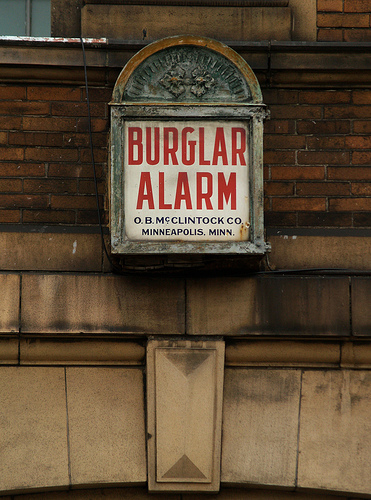
The first burglar alarms, which appeared in the 1850s, weren’t as primitive as you might expect. These alarms ran on rather large batteries that connected individual alarm units to a large bell or gong. Since these alarms were initially designed for small shops and businesses, the arming devices for the burglar alarms were located outside the shop so they would protect stores during the night. When the alarm system was armed, opening a door or window would send an electric current from the battery to the alarm itself. Alarms of this nature were popular for many years.

However, criminals found ways to get around these systems. Since these alarms were armed from the outside, thieves and burglars could snip the wires to the alarm without even having to enter the premises. Also, as you can imagine, these alarms were only useful to businesses in shopping plazas and urban areas.

The next step in the evolution of burglar alarms was to hook a phone line to the alarm setup. This would send an electronic signal to a police station, and they could respond to the burglary themselves. Due to technical limitations of the time, this phone line had to be used solely for the burglar alarms. Likewise, it didn’t take long for criminals to cut the phone lines connected to burglar alarms.

This setup, with a few tweaks, was standard for home and small business burglar alarms until the 1990s. Digital technologies made the sensors in burglar alarms a bit more precise. A digital transmitter, still using the phone line, could send different signals to a monitoring center. This gave rise to multiple-purpose burglar alarms that would also alert a monitoring center in case of fire or other emergencies. Also, the advent of the monitoring system also created a buffer for false alarms, so the police would not report constantly to faulty alarms.

Phone line systems were later augmented with cellphone technology. Burglar alarms could now transmit signals to a monitoring center without wires, making it much harder for crooks to disable the alarms prior to breaking in. Although more complex security systems have been in development for larger institutions, these modern wireless burglar alarms are usually quite effective in deterring burglaries in residential areas.

Photo via KevinDooley

{ 0 comments }

Post image for Intercoms & Peepholes Keep Strangers at Bay

Topping the charts of the all time best parental axioms is the familiar adage: never talk to strangers.  Though this advice was critical to our personal security as children, continuing to adhere to it as adults is impossible, and slightly rude.  However, a simple modification to the axiom can revive its usefulness in our adulthood by increasing our level of home security: never open the door to strangers.

Installing doorbell intercoms and peepholes will allow you to communicate with and see an unknown visitor and decide if they are an unwanted visitor – before you open the door.  Not opening the door to unwanted guests can prevent situations such as forcible entry and home invasion.  Furthermore, many professionals use a meet-and-greet as a surveillance technique in order to collect information from you.  There is also the added bonus that you can maintain a physical barrier between you and your own special brand of annoying individual.

Peepholes are a simple and cheap home security device.  They range in price from $5 to $70.  It is better to buy these in a store where you can check the optical quality; cheap peepholes can be blurry and useless, while higher end units that penetrate the depths of the cosmos can be unnecessary.  Installation is not too difficult but will usually require a power drill.  You may want to consider installing one at a lower height for the kids.  Not only will they need to use it as well, but it will help them develop good, security conscious habits.

Home intercoms have evolved into an affordable and effective tool for your home.  They now integrate wireless technology and therefore are very easy to install.  Doorbell intercom systems can be as cheap as $60 with prices rising into the hundreds as interesting features (such as a live video feed) are added.   At the lower end of the price range, wired systems are cheaper, so if you are handy you might want to save money by installing a wired system.  See www.intercomsonline.com to compare prices and find a model that’s right for your home.

Once you have installed your intercom and peephole, the key is to actually use them.  These security devices do not function in the same way an alarm does.  Well maintained alarms work even when the home owner is passive.  Intercoms and peepholes, on the other hand, are instruments that are only useful when you are proactive enough to use them.  So stay safe, stay alert, and leave any unwanted guests unanswered.

Photo via Traci Bunkers

{ 0 comments }

Post image for What are the Chances it Will Happen to Me?

Many people are reluctant to install home security devices because they believe burglary is one of those things that only happens to someone else.  The FBI thinks otherwise.   According to the FBI’s Uniform Crime Report, there are over 2,222,000 burglaries in the United States each year.  That is approximately one burglary every 14 seconds!  Learning the facts will motivate you to take proactive measures to protect your home.  The following facts come from the FBI’s Uniform Crime Reports:

Of burglaries, 61.2 percent involve forcible entry, 32.2 percent were unlawful entries without force, and 6.4 percent were forcible attempts that failed.  Unlawful entries without force, such as walking through unlocked doors or windows, can be prevented by never leaving your doors unlocked, even during the daytime.  Security alarms can be triggered even if the burglar uses a stolen house key to enter without the use of force.  Forcible entries such as breaking or prying doors and windows occur twice as often.  These type of entries can be prevented by using solid door locks and window security bars.  Let’s take action and make the percentage of failed attempts skyrocket next year.

Burglaries in residential properties accounted for 70.3 percent of all offences.  Of those, 62 percent occur during the daytime hours!  Additionally 60 percent occur when the occupants are at home.  This can be a shocking statistic, but it is true.  Just use common sense, lock your doors and set your alarms even if you are just relaxing in the backyard.

High season for burglary are the months of July and August, coincidentally the same high season for vacationers.  Be careful who you share your information with, not everyone in the world needs to know that your house is vacant and vulnerable.  It is also a good idea to have a friend collect your mail and check on the house during your absence.

Only one out of three homes uses a security system.  Homes without security systems are over twice as likely to get broken into.  Taking security measures will always make your home look less of an appetizing target for a burglar.  Ideally, the crook will be warded off by the signs of home defence and look for another target.

In a single year, robberies have cost over $4.6 billion in lost property.  This averages to a loss of $2079 per offence.  Only 13 percent of burglary cases are solved by the police, and so there are many successful criminals currently on the job and looking for an easy target.

See www.fbi.gov/ucr/cius2008/offenses/property_crime/burglary.html

Photo via needindya

{ 0 comments }

Burglars Get High-Tech

July 19, 2010

Post image for Burglars Get High-Tech

The modern day burglar does not need fancy gadgetry to be considered a high tech thief.  With only a laptop and access to the internet, a crook can obtain important information that will help him accomplish his task.  Here are four simple ways that can bring any would-be burglar into the realm of the high tech:

1.  Google Maps

If you were shopping for a new flat screen, you might flip through a catalogue to see which items are of interest and deserve a closer look.  If a burglar wanted to steal a new flat screen, he might explore one of many online mapping tools that use satellite imagery, and decide which houses deserve a closer look.  From the maps, which show individual properties with surprising clarity, a crook can learn about the lay of the land; he can see see shrubbery, fencing and other details that will help him plan his point of entry, and route of escape.

2.  Google’s Street View

Though Google has taken security precautions such as blurring licence plates and faces, information can still be gleaned from the new ‘Street View’ feature.  This feature gives everyone in the world a panoramic view of your front yard and surrounding neighbourhood.  Instead of suspiciously sitting in a car and observing, the burglar can now get a view of his target from the comforts of his own home.

3.  Facebook, Twitter and Flickr

People these days are very willing to share their personal information with the world.  Social networking sites such as Facebook, Twitter and Flickr allows people to freely give away information that can be very useful to a burglar.  These sites make a thief’s life simple:  he can learn about your upcoming vacation from Facebook, view your household items on Flickr, then take his time stealing those items because according to your last Tweet, you are enjoying the sunshine on a beach 1000 miles away.

4.  Surveillance Made Easy

Why go through the effort of scanning social websites for information useful to a robbery?  There are now websites that post the whereabouts of individuals for all to see; a convenient tool for the lazy burglar.  Sites such as www.pleaserobme.com upload actual Tweets and Facebook status updates that indicate when a person is away from home.  Many people are willing to let the entire world know that they are stepping out of the house for groceries, and these sites specialize in listing which houses are currently vacant and ready to be robbed.

To counter the modern burglar, begin by taking control what you can.  Adjust the privacy settings on your social network account, and be careful of the information you share, especially of your whereabouts.  You don’t want to be the next hot item on this site: www.robmenow.com

Photo via Geeks On Call

{ 0 comments }

Homemade Burglar Alarms

July 16, 2010

Are you interested in protecting your home from burglars, but lack the funds to invest in a comprehensive security system? One way to save lots of money on burglar alarms is to make your own. Homemade burglar alarms may not be as sophisticated as some of the comprehensive security packages you can get installed, but they can provide some security at an ultra-low price. If you are interested in making homemade burglar alarms, be sure that you have some experience in do-it-yourself electronics. Some of these projects may put you at risk for electric shock, so be careful.

One very easy method for making homemade burglar alarms is to splice an electronic alarm onto a motion sensor light bulb. Most major hardware stores will sell the components for this particular style of homemade burglar alarms for very cheap. To assemble one of these homemade burglar alarms, you shouldn’t need to spend more than $20. Be careful if you decide to go with these style of homemade burglar alarms, as they can be difficult to disable and, depending on where you place them, they may set off false alarms frequently.

Another technique for making homemade burglar alarms is to modify electronic door chimes. These door chimes are usually pretty cheap, and they operate on a simple premise: when someone opes a door or window, it seperates the two parts of the device and the change in current makes a ringing noise. Usually, this noise isn’t very loud, so you need to tinker a little bit to get the homemade burglar alarms to be truly effective. You can wire several of these to one central panel with some ease. For instance, each door or window, when opened, can set off an alarm and perhaps an LED light in the master bedroom to alert the head of the household of a potential break-in.

There are plenty of other methods to design your own homemade burglar alarms, but even the basics require some knowledge of electrical work. If you don’t know how to splice wires or how to manipulate flow of electrical currents, you should probably read up before attempting any homemade burglar alarms. If you have a background as an electrician, you can find some more detailed plans for sophisticated homemade burglar alarms. Many community colleges and trade schools offer classes that teach basic home security electrical wiring, so you may want to look into that if you’re interested in making extensive and comprehensive homemade burglar alarms.

Photo via Giolou

{ 0 comments }

Antique Burglar Alarms

July 14, 2010

Modern burglar alarms, although quite sophisticated, lack a bit of charm compared to their older predecessors. The old metal bell alarms have a certain charm that many collectors of antiques are now starting to recognize. As antique collectors and dealers are finding out, the past has provided us with many bizarre and outdated burglary prevention techniques. Although these are not practical for home use anymore, many of these strange alarm systems have appeal to collectors due to how rare they’ve become.

Many early model burglar alarms have attracted the attention of antiques shops and vintage collectors due to their interesting, albeit unorthodox, technologies. For instance, some old burglar alarms from the turn of the last century look downright alien compared to modern systems. Some looked like door jambs that would strike a large alarm bell if someone attempted to open the door. Other early alarms might ignite small amounts of gunpowder to trick a would-be burglar into thinking someone had fired a gun. Some antique burglar alarms took it a step further by actually discharging a bullet at someone unexpected coming through the door. As you might imagine, these burglar alarms were eventually done away with because they were unsafe and impractical. Many vintage alarms are small-batch models that never garnered enough success for mass production.

Even more recent burglar alarms, from the 1950s and 1960s, have had success with antiques buyers. These vintage alarms are usually very large and clumsy by today’s standards, since they were usually powered on car or motor boat batteries. To collectors, these big boxy burglar alarms can be quite enticing due to their impractical nature.

Finding antique burglar alarms can be tricky, given several factors. First, most vintage alarm systems already belong to antique collectors. There’s not much of an incentive for someone to hold on to a family heirloom alarm system, given their impracticality. So, finding antique burglar alarms at a yard sale or flea market can be tough. Also, many of these alarm systems are either quite fragile or very cumbersome. If you are ordering antique burglar alarms from an online retailer, shipping costs add up quickly.

That being said, the Internet is an excellent place to look for antique burglar alarms. eBay, and other online marketplaces, will greatly assist in your search. However, when shopping for antique burglar alarms online, be sure that you are buying from a reputable seller. Antiques are worth the most when they are in mint condition, so the last thing you want is to drop hundreds of dollars on a broken piece of junk.

Photo via Vishal Somaiya

{ 0 comments }

Master Sun Tzu said: know your enemy, know yourself, and victory is never in doubt, not in one hundred battles.  To apply the ancient wisdom of Master Sun to home security, we must know the mind of the burglar, and adjust our defences accordingly.  It is important to understand the four types of burglars and their methods of entry if you are to prevent them from entering your home.

1.  Breakers

Blundering, unintelligent, and unprofessional, these wannabes are the most easily startled of all types of burglar.  They tend to act out of desperation and do little planning.  The counter strategy is simple:  make it difficult for them to physically break through the entry points, then scare them off with alarms triggered by their recklessness.  Using dead-bolts, replacing old door frames, and installing window security bars makes it difficult for a breaker to pry, or smash his way in.  Choose from a wide variety of sound alarms that are triggered by this form of entry.  Install glass-break detectors if your home has large windows that cannot be barred.  The key is to purchase quality products, and test them frequently.  Breakers pay no heed to cameras, but they shun loud noises and bright lights.

2. Sneakers

These sly devils employ lock picks and hide under the cover of darkness.  The key attribute of a sneaker is that the enter unseen and unheard.  Lock-picking, unlike in the movies, is a time consuming task.  So using multiple locks of high quality will deter the lock-picker.  Be sure that all doors and windows are equally secure.  A chain is as strong as its weakest link, and a good sneaker always finds the weakest link.  Trim shrubs, use landscaping lights, leave no shadows for them to hide.  Sneakers abhor cameras and lights, but they are not as easily startled by sounds.

3.  Intruders

The idea of home invasion is a frightening one.  Many of these intrusions are targeted attacks, and so can be avoided by steering clear of troublesome business and troublesome people.  Unfortunately they can also be random, so it is important to be prepared.  Intruders tend to employ extreme violence, work in teams and carry weapons.  This is the only type of burglar that does not care whether you are home or not.  The first thing you must do is strongly secure your household against breakers.  Intruders may trick you into weakening your security.  It can be as simple as a knock on the door; as soon as you open the door to your unknown visitor, they force their way in.  Counter this with solid habits: Always use the peep hole, and only open the door to someone you know and trust.  Make a plan of escape, establish hiding spots, practice with your kids.  Awareness, preparedness, and calmness are your weapons against intruders.

4.  Professionals

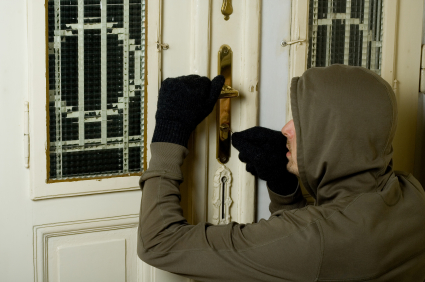
We’ve all seen them in the movies: benevolent and beautiful protagonist thieves whom we grow to love over a two hour period.  Professional thieves do indeed exist, but in a less romantic way.  They are masters of surveillance.  They may be casing several locations for months while they perfect their plans.  Professionals prefer to appear to be on legitimate business, possibly walking into your home with your own keys during the daytime.  Never attach your identification to your keys!  This is a lead used by a pro, and may even be used by a wannabe.  Form a neighborhood watch, let suspicious people and vehicles know that you are watching.  The professional avoids violence and conflict.  They only care about one thing: the pay off.  Make the effort higher than the pay off, and the professional will pass you by.

Master Sun said: The highest level of warfare is to attack strategy itself.  So to know the burglar, to know his mind, his techniques, and his strategy, is the cornerstone to keeping him where he belongs: away from your home.

Photo via miserablespice

{ 0 comments }

One way that many people are cutting costs on security is to purchase alarm systems that they can install without the help of a professional. Professional alarm installation can sometimes cost way more than people care to spend, or even anticipate spending, so sometimes a do it yourself alarm system can save you a lot of money while not jeopardizing the safety of your home. However, if you want to install your own burglar alarm, you’ll need to take a number of different factors into consideration.
First, obviously, is your experience with electronics. This will be the biggest limiting factor, other than cost. If you have a lot of know-how with electronic systems, you can install a very sophisticated security system on your own. However, if you have very little experience, you may have difficulty installing the more complex burglar alarms. If you can’t install the alarm system you want on your own, you should just bite the bullet and get a professional installation. The other thing to consider is what sort of system to invest in. You can get a self-contained alarm for an individual door or window for very cheap, but if you have a larger property with multiple points of entry, these might not be practical. With many professional installations, they’ll help you figure out what alarm system is best for your needs. If you’re doing it on your own, it’s up to you to find the alarm system best suited for you.
Another important thing to remember with do-it-yourself burglar alarms is that if the alarm is easy for you to install with little technical know-how, it will be easy for a burglar with little know-how to disable it. If you have the skills, the best type of system to install is one that has multiple sensors connected to the same burglar alarm system. Even if a criminal disables one individual component of the alarm, the alarm will still sound. Likewise, if you are protecting a larger property, it can oftentimes be cheaper to install a central alarm system than installing several individual systems.
Regardless of which route you take, it is very important to test your alarm system after installing it. If you have followed the directions improperly, or if there’s a defect in the system itself, you’ll want to know before, rather than after, any crimes take place. You’ll want to make sure that you occasionally check up on the system to see if it’s still functional. Any alarm system running on battery power is generally not recommended, unless you want to routinely check the battery power left in your alarms.

{ 0 comments }

Just because you suffer from a hearing impairment does not mean you must compromise your home security. More and more burglar alarms are being made that provide assistance for people with hearing problems. Although these may be a bit harder to find than your traditional alarm system, these are essential if you are deaf and need your property protected.
Many hearing impaired-friendly alarm systems will still come with an audible siren. Although it may not seem like it would be useful, having an audio alarm is still important even to the hearing impaired. First, simply hearing the sound of an alarm is enough to spook most small-time crooks. Odds are, the burglar has no idea if you are deaf or not, so they tend to flee regardless. Also, audible alarms are important for anyone you might have in your home or business who is not hearing impaired. For these reasons, it is usually not advisable for you to get a silent alarm even if you can’t hear the alarm go off.
There are other features to look for in alarms for the hearing impaired. Does the alarm send a digital notification to the authorities? If you discover someone breaking into your home, you may have difficulty contacting the police. If your alarm system sends out a signal, the police will know you’re in danger and will send someone over as soon as possible. This can greatly save time, and timing is one of the most important factors in reporting and solving crime. Also, with many digital notification systems, they can inform police of your impairment as soon as they receive the signal from the alarm system. They will be able to cater to your needs with little to no confusion.
One more thing to consider is if the alarm has some kind of visual component. A number of burglar alarm systems will set off flashing lights to let you know if someone is breaking into your home. If you live in a larger home, you’ll need to make sure that the alarm system comes with several light fixtures that will set off throughout the house, so you’ll know if someone is breaking into the house from an entry point that you can’t see. Some alarm systems catered toward the deaf may even come with an electronic buzzer for you to keep on your person. The alarm system will transmit the signal to the receiver you have in your possession, causing it to vibrate once someone has gained unwarranted entry to your home.

{ 0 comments }

If you own a business that handles cash or valuables, you need a burglar alarm. It’s as simple as that. Even if you store valuables in a safe after hours, you can never be too cautious. There are many reasons to break into a business, whether it be outright theft, corporate sabotage, or kids breaking into your place of business for kicks. Many small businesses have a hard enough time surviving without a break-in. A burglary may put a nail in your coffin if you aren’t careful.
Commercial burglar alarms oftentimes cost more than residential alarms, for various reasons. For instance, does your business have a prominent glass storefront? A simple burglar alarm on the door won’t amount to anything if someone smashes the glass and just goes right in. In order to prevent this, you’ll want to look into motion or sound activated alarms. Many businesses also opt for security cameras, or closed circuit television, to augment their alarm systems. Many companies selling commercial burglar alarms can often include things like security cameras in a comprehensive security package. Some of these alarm system packages will also bundle fire and smoke alarm systems. If you already have coverage for these services, there’s no point in you paying for the same thing twice.
The best commercial burglar alarms will also send out a digital signal to the police to notify them of a break-in. Unlike with private residences, it is very difficult to “accidentally” break into a business, or to enter the building after hours. Some businesses may want to use silent alarms; however, if your business is located in a heavily-populated area, you should look for an alarm that will create as much noise as possible. This will alert people nearby that a building has been broken into, and it also will spook the criminal.
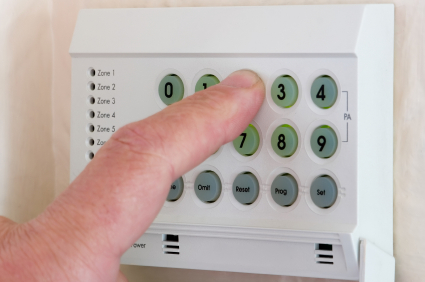
Many businesses are broken into by employees. If you are getting a commercial burglar alarm, it would be in your best interest to limit the number of employees who know the disable code. This information is best suited for managers and trusted, long-term employees. You should never give out the code to your commercial burglar alarm to anyone you don’t trust. All it takes is for that information to fall into the hands of one dishonest person for there to be a burglary. Similarly, in order to avoid the alarm going off accidentally, you should make it a policy to forbid your employees access to the building after-hours, unless they have approval from you or a manager.
Photo via takomabibelot

{ 0 comments }

Copyright © 2012. All Rights Reserved. Home | About | Terms of Service | Privacy Policy